
Blog › Safety
Alberta Distracted Driving Laws: Fines & Demerits Guide
Master Alberta distracted driving laws. Learn about the $300 fine, 3-demerit penalty, and how to stay safe. Study now to prepare confidently for your test.
By Drive Alberta · Published 2026-09-15 · Updated 2026-11-01
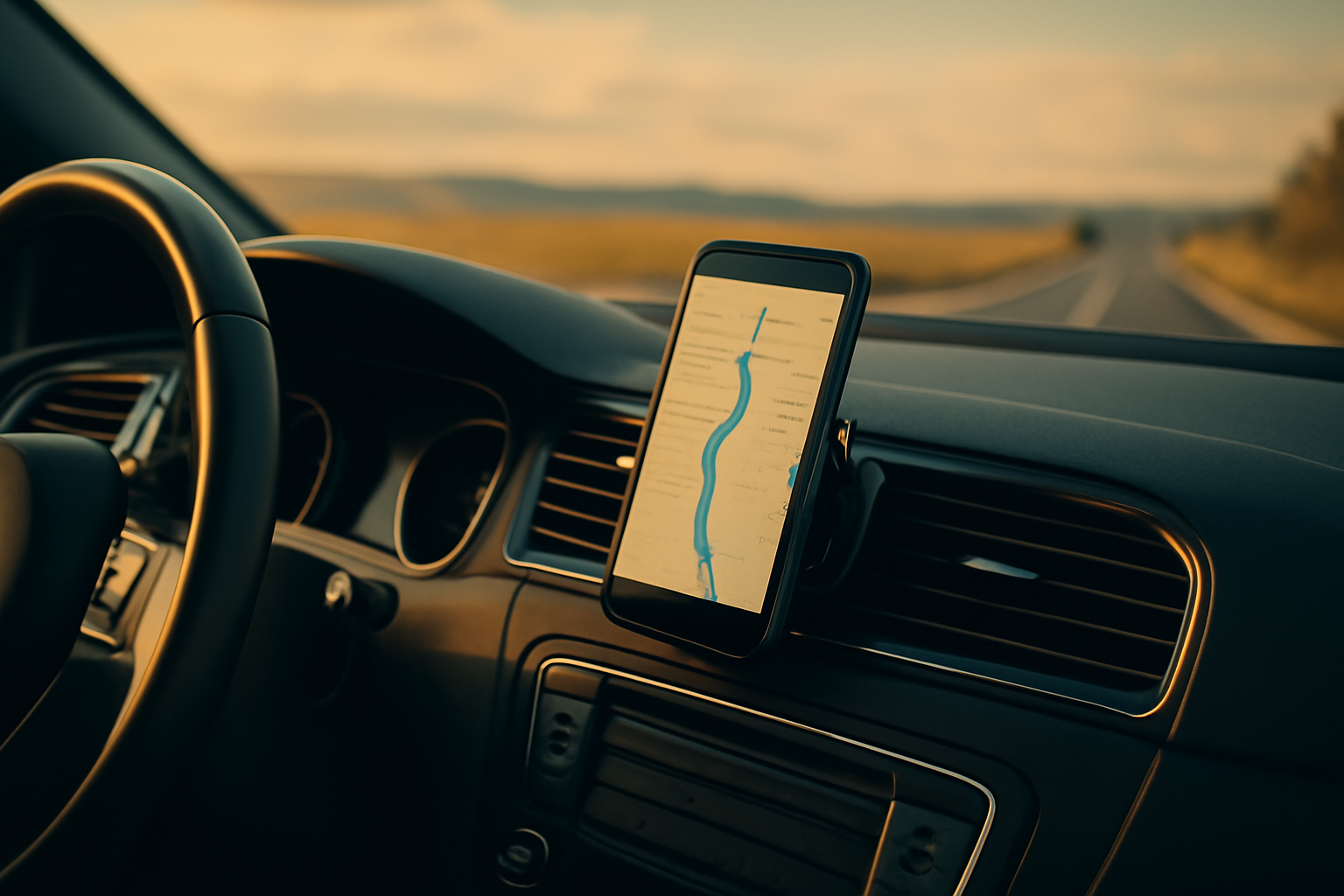
Operating a vehicle in Alberta requires your full attention. As road safety becomes a paramount concern for the Government of Alberta and local law enforcement, the penalties for distracted driving have reached a historic level of severity. Whether you are navigating the busy streets of Calgary or the rural highways near Red Deer, understanding the nuances of the Traffic Safety Act is essential to keep your license clean and your insurance rates manageable. This guide is aligned with the latest 2024 regulations to ensure you are fully informed before you hit the road.
Understanding the Traffic Safety Act Section 115
In Alberta, distracted driving is not just a suggestion for safety; it is a strictly enforced law under the Traffic Safety Act. The legislation was introduced to curb the rising number of collisions caused by inattentive operators. Unlike some jurisdictions that only target mobile phones, Alberta’s laws are comprehensive, covering a wide range of activities that could divert a driver's attention from the task of driving. According to Alberta.ca, the law applies to all vehicles as defined by the Act, including bicycles and motorcycles, though enforcement primarily focuses on passenger and commercial motor vehicles.
The $300 Fine and 3-Demerit Penalty in 2024
If you are pulled over for distracted driving in Alberta, the immediate consequences are dual-layered. The financial penalty is a flat fine of $300, which includes the victim surcharge. However, for many drivers, the fine is the least of their worries.
Demerit Points: Every distracted driving conviction results in 3 demerit points being added to your driving record. For those studying for their initial license, utilizing a practice test can help you memorize these specific penalty values, which frequently appear on the official knowledge exam.
| Penalty Type | Details for 2024 |
|---|---|
| Financial Fine | $300 (Total with surcharges) |
| Demerit Points | 3 Points |
| Record Duration | Remains on MVID for 2 years from conviction |
| Insurance Impact | Classified as a 'Major' or 'Serious' conviction by most providers |
What Counts as a Distraction?
The law is broader than many realize. It restricts drivers from engaging in activities that impair their ability to operate a vehicle safely. Specifically, you cannot:
- Use a handheld communication device: This includes texting, emailing, or talking on a phone without a hands-free system.
- Enter data into a GPS: You must set your destination before you put the vehicle in gear.
- Reading or writing: This includes physical maps, books, or notes.
- Personal grooming: Shaving, applying makeup, or flossing while driving is prohibited.
It is important to note that you can be ticketed even if you are stopped at a red light. The law applies as long as you are in care and control of a vehicle in traffic.
Impact on Class 7 Learner Drivers
For those holding a Class 7 Learner's License, the stakes are significantly higher. Under the Graduated Driver Licensing (GDL) program, a learner is suspended after accumulating only 8 demerit points. A single distracted driving ticket accounts for nearly 40% of your total allowed points. Furthermore, a conviction will likely extend the time you must remain in the learner stage, delaying your progress toward becoming a fully licensed driver. If you are currently preparing for your Class 7, review our visual learning tools to better understand how to identify and avoid these hazards.
Standards for Class 4 Professional Drivers
Professional drivers, such as those operating taxis, Ubers, or ambulances under a Class 4 license, are held to an even higher standard of public trust. A distracted driving conviction on your MVID (Motor Vehicle Identification) record can lead to immediate termination from ride-share platforms or commercial fleets. Employers in the commercial sector regularly pull driver abstracts, and a "Major Conviction" like distracted driving is often a disqualifying factor for employment.
Long-term MVID Driving Record Impact
Your MVID record is the permanent log of your driving history in Alberta. When a distracted driving conviction is registered, it stays on your public abstract for two years from the date you pay the fine or are found guilty in court. However, insurance companies may look back even further—often up to three or five years—when determining your risk profile. This conviction is not viewed as a simple parking ticket; it is treated with the same gravity as speeding in a school zone.
Permitted Activities
To prepare confidently for your commute, you should know what is still allowed under the law:
- Hands-free communication: Using a cell phone in hands-free mode (voice-activated or one-touch) is permitted, provided the device is not held in the hand.
- Integrated displays: Using a built-in vehicle screen for climate control or radio is allowed.
- Emergency calls: You may use a handheld phone to contact 911 emergency services.
- Drinking/Eating: While not explicitly banned under the distracted driving law, if your eating causes you to drive erratically, you can be charged with 'Driving Without Due Care and Attention,' which carries much higher penalties.
Debunking Common Distracted Driving Myths
- Myth: "I can use my phone if I'm at a red light."
- Reality: False. You are still legally operating the vehicle while in traffic. Police in Calgary and Edmonton frequently use 'spotters' at intersections to catch drivers checking their phones at lights.
- Myth: "If the phone is in my lap, it's okay."
- Reality: False. If the device is not securely mounted or used via hands-free technology, having it in your lap is considered 'holding' the device.
Enforcement Trends in Calgary and Edmonton
Recent reports from the Edmonton Police Service show that distracted driving remains a top cause of preventable collisions. Law enforcement agencies have moved toward 'High Visibility Enforcement' periods, where undercover officers in transit buses or elevated vehicles look down into cars to spot drivers using devices. According to CTV News Calgary, police are seeing a stubborn trend where despite the $300 fine, many drivers still prioritize their notifications over the road.
Insurance Consequences
The Insurance Bureau of Canada (IBC) notes that distracted driving is a leading factor in rising premiums across the province. In Alberta, a single distracted driving conviction can increase your annual insurance premium by 25% to 50% depending on your provider. Over three years, that $300 fine could actually cost you thousands of dollars in additional insurance costs.
How to Appeal a Distracted Driving Ticket
If you believe you were wrongly ticketed, you have the right to a trial. You must check the back of your ticket for the court appearance date. To appeal successfully, you typically need to prove that you were not using the device or that you were using it for a permitted emergency. Many drivers choose to consult with legal traffic specialists to navigate the Alberta Court of Justice. However, simply claiming you "didn't know the law" is not a valid defense.
Practical Safety and Prevention Tips
- Do Not Disturb Mode: Enable the 'Driving' focus mode on your smartphone to silence incoming texts automatically.
- Passenger Navigation: If you have a passenger, make them the 'designated texter' and navigator.
- Mount Your Device: Purchase a dash or vent mount to keep your GPS at eye level without needing to touch the screen.
- Prepare Before Moving: Adjust your mirrors, seats, and music before you shift out of Park.
For more information on road safety and passing your Alberta knowledge tests, check out our latest posts on the official blog.
Key Takeaways
- The Fine: $300 is the total cost for a distracted driving ticket in Alberta for 2024.
- Demerits: 3 demerit points are applied to your MVID record upon conviction.
- Scope: The law covers phones, grooming, reading, and GPS programming.
- Learners: Class 7 drivers are at high risk of license suspension due to lower demerit thresholds.
- Safety: Always use hands-free technology or pull over safely before using a handheld device.
Frequently asked questions
Can I use my phone at a red light in Alberta?
No. Under the Traffic Safety Act, you are still considered to be operating the vehicle while stopped in traffic. You must be legally parked (pulled over to the side and in 'Park') to use a handheld device.
How many demerits do I get for a distracted driving ticket?
A distracted driving conviction results in 3 demerit points being added to your Alberta driving record.
Does the law apply to Class 7 Learner drivers?
Yes. The law applies to all drivers. For Class 7 learners, this is particularly dangerous as they only have 8 demerit points before a suspension occurs.
What is the total fine for distracted driving in 2024?
The total fine, including the victim surcharge, is $300.
Can I use a GPS while driving?
You can use a GPS if it is programmed before you begin driving or if it is voice-operated. You cannot enter information into a handheld GPS while the vehicle is in motion or stopped in traffic.
Is drinking coffee while driving illegal in Alberta?
Eating or drinking coffee is not specifically prohibited under the distracted driving law, but if it causes you to drive unsafely, you could be charged with 'Driving Without Due Care and Attention.'
How long does a distracted driving ticket stay on my record?
The conviction stays on your MVID (Motor Vehicle Identification) record for two years from the date of conviction or payment.
Can I use headphones while driving?
While not explicitly banned, using headphones can be considered a distraction if it prevents you from hearing emergency sirens or other traffic sounds, potentially leading to a 'Due Care and Attention' charge.
Are Ubers and Taxis allowed to use dispatch screens?
Class 4 drivers and commercial operators can use screens for work-related dispatch, but they are still encouraged to minimize interactions while the vehicle is moving to ensure passenger safety.